3
Morning
Three, before the day starts
Say or write your intention three times as soon as you wake — before your phone, before anyone needs anything. Under a minute.
Free iOS app · no ads
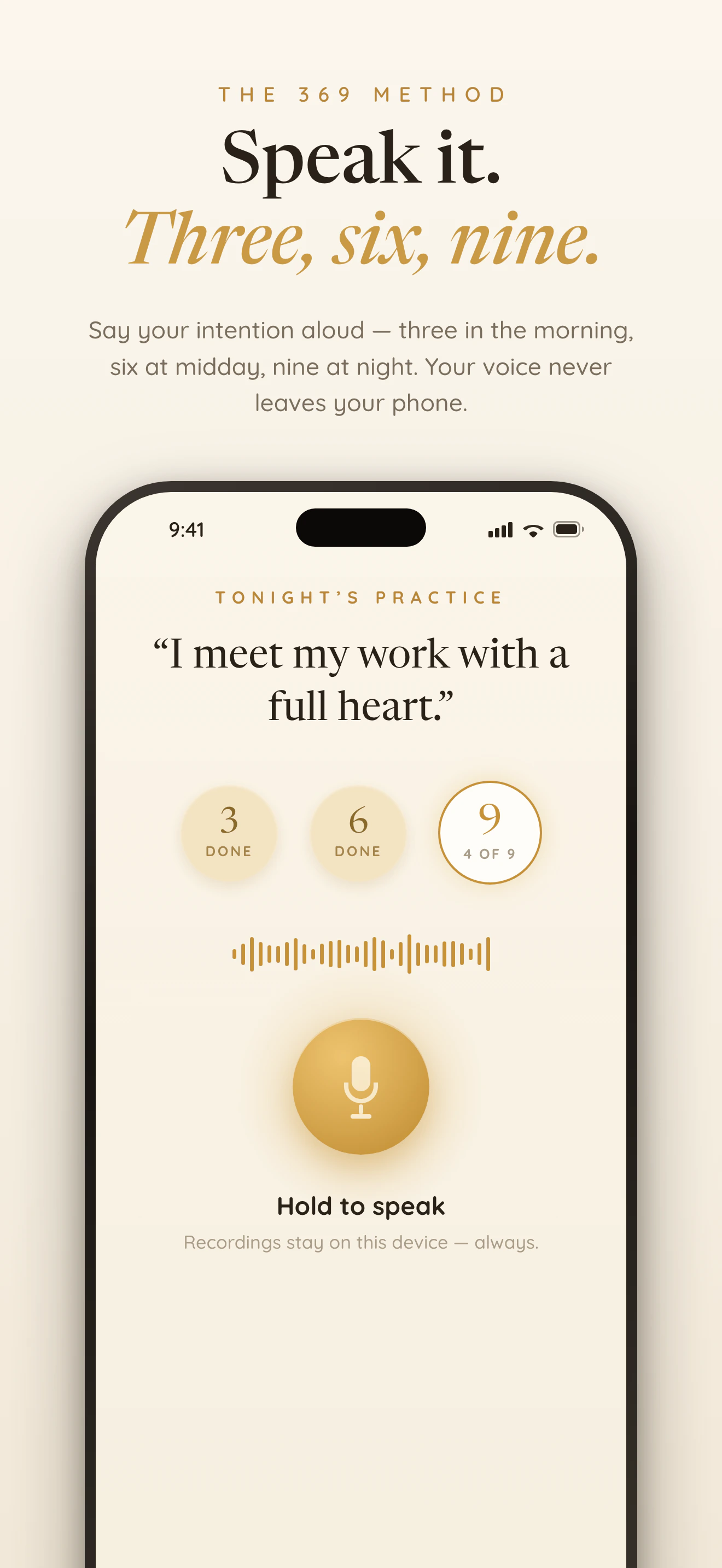
Three in the morning. Six in the afternoon. Nine at night. Write it or say it out loud — one sentence, repeated until you believe it. Here’s the whole practice — and an app that keeps the count, listens while you speak it, offers a written mode when you can’t, and reminds you when the day runs away.
The short answer
Pick one thing you want. Write it as a short present-tense sentence. Say or write it three times in the morning, six in the afternoon, nine at night — every day, for 33 or 45 days.
That’s the entire method. There is no missing step. The difficulty was never complexity — it’s that eighteen repetitions spread across three moments of a busy day is genuinely hard to remember, and almost everyone drops the afternoon round first.
The numbers lean on Nikola Tesla’s documented fascination with 3, 6 and 9 — though the famous “key to the universe” quote attributed to him has never been verified, and Tesla never taught a manifestation routine. The modern 369 method emerged on TikTok around 2020. The practice earns its keep on attention and habit, not on physics.
Nikola Tesla, the numbers, and the honest origin →How it works
The structure isn’t decoration. It front-loads your day with what you want, interrupts the middle when your attention has drifted, and closes the night with it.
Morning
Say or write your intention three times as soon as you wake — before your phone, before anyone needs anything. Under a minute.
Afternoon
The round that breaks streaks. Anchor it to something fixed — lunch, the commute, the school run — and it stops being a decision.
Night
The longest pass, closest to sleep. Slow down here. This is the round where the sentence stops being words and starts being a feeling.
See it in the app
Speak or write your intention through three stages that unlock in order — with the count, the reminders, and the streak kept for you.
369 Method
Speak it. Three, six, nine.
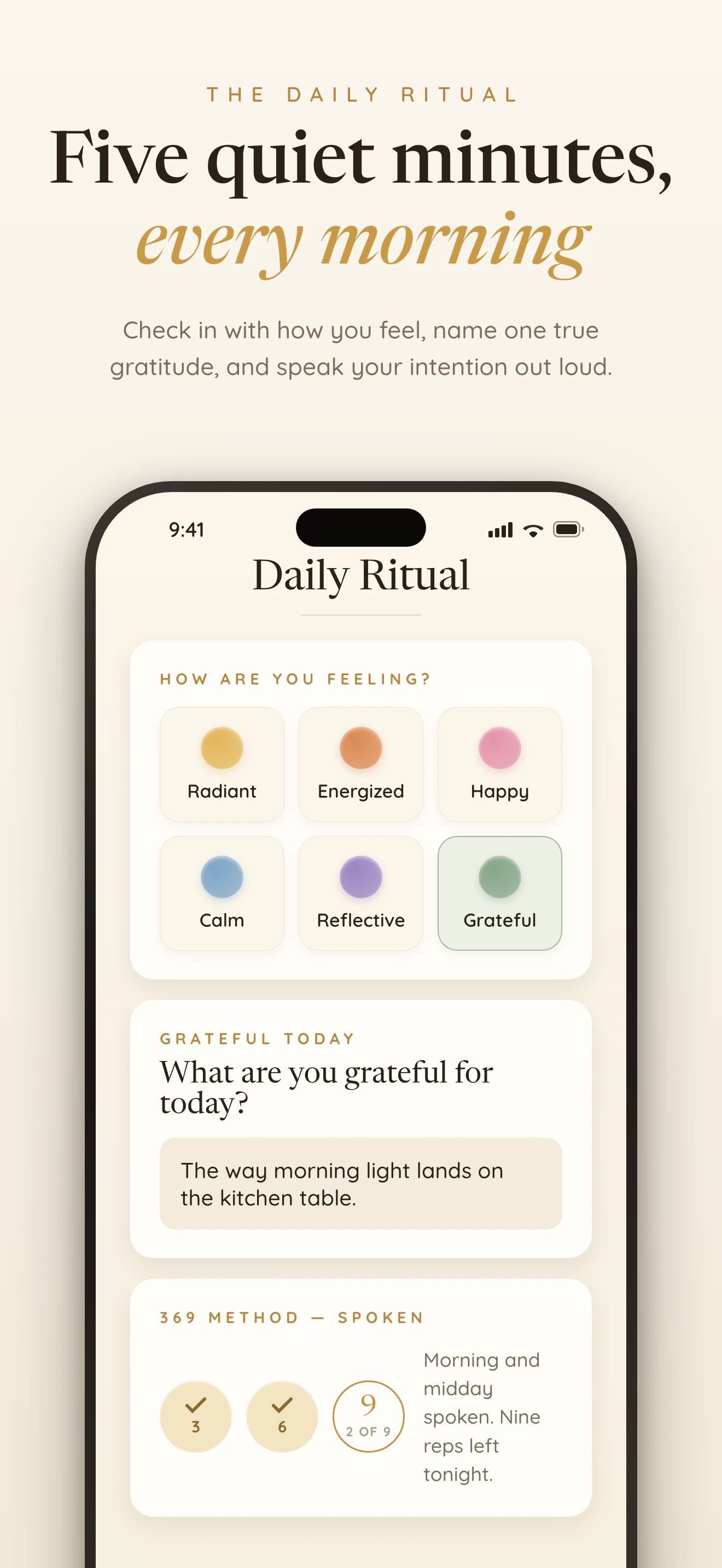
Daily Ritual
One intention, kept in rhythm.
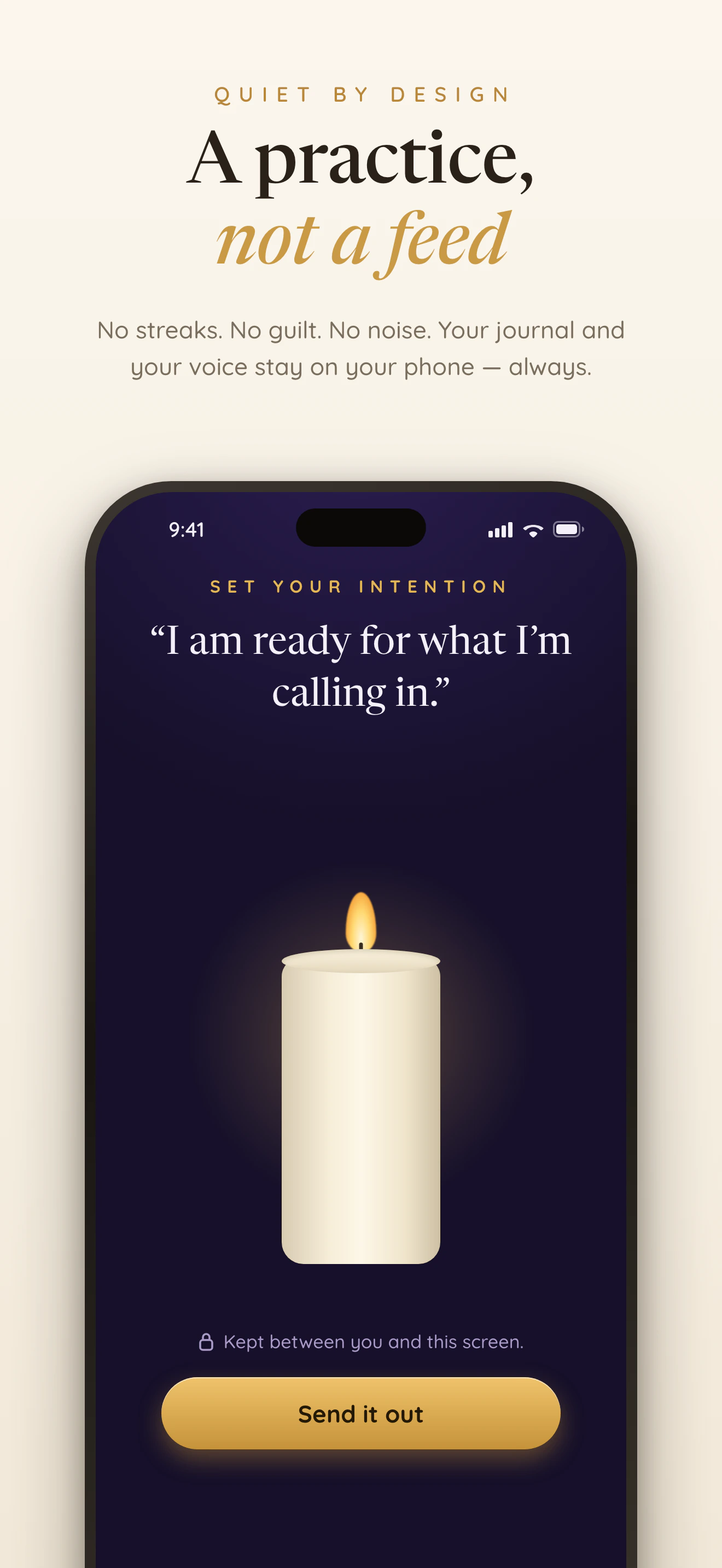
Intention
Set it once. Practise it daily.
The practice, kept alive
Shyne is a daily manifestation app for iOS with the 369 method built in as a guided practice — so the count, the timing, and the reminders aren’t your job.
Hold to speak your intention aloud and the app listens for each repetition. Hearing your own voice claim something is much harder to tune out than copying a line onto a page. Written mode is there for when you can't speak.
Three stages that unlock in order — 3, then 6, then 9. No tallying, no wondering whether that was the seventh or the eighth. Reminders for all three slots, including the afternoon one you'd otherwise miss.

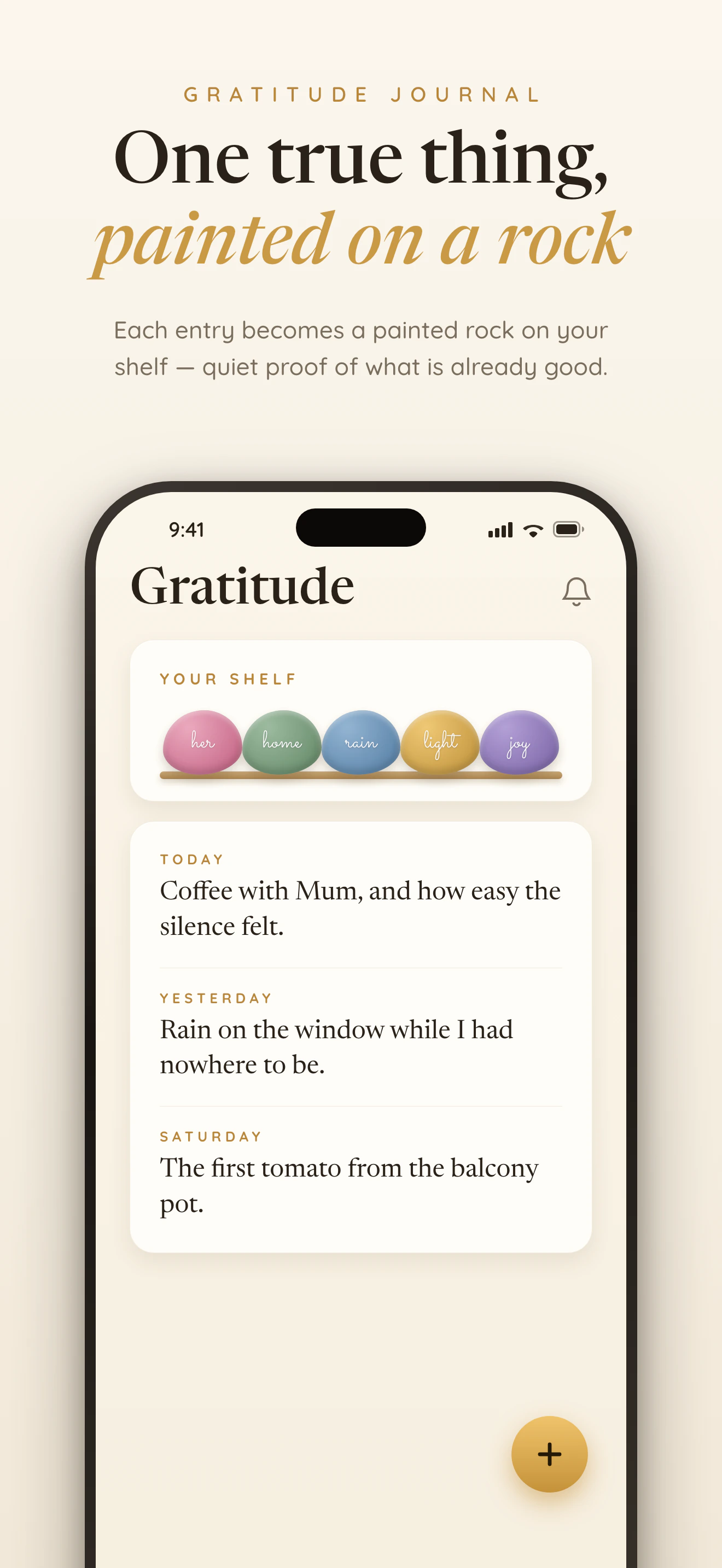
One intention set through a candle ritual, a gratitude journal, curated affirmations, and a room of ambient sounds. The 369 method sits inside a daily ritual rather than floating on its own.
Guides
Straight answers, including the ones that aren’t flattering to the practice.
The origin, the Tesla connection, and what the numbers 3, 6 and 9 actually stand for.
Read the guide →The exact routine — when to do each round, how long it takes, and what a real day looks like.
Read the guide →How to word your intention — the present-tense rule, length, and examples you can adapt.
Read the guide →An honest look — what the practice really does, what it doesn't, and how to judge your own results.
Read the guide →Wording that stays believable, plus why financial intentions stall more than any other kind.
Read the guide →Wording for a relationship, a reconciliation, or a specific person — and where that last one goes wrong.
Read the guide →How long a cycle should run, what to do when you miss a day, and when to stop.
Read the guide →Paper, notes app, or a guided practice — the honest trade-offs, and what actually keeps a streak alive.
Read the guide →Habit science
The research behind consistency, writing, affirmations, and missed days — plain English, no mysticism. Read the hub →
The afternoon round is a memory problem, not a motivation problem — and the behavioural science behind why cycles die in week one.
Read the guide →Where the famous 42% statistic comes from, what the study actually measured, and what decades of goal research says about writing.
Read the guide →The 21-day rule came from a 1960 plastic surgery book, not a study. Real habit research found a median of 66 days — with huge variation.
Read the guide →The reason a daily practice survives is rarely willpower. It's that it got attached to something already fixed in your day.
Read the guide →FAQ
Start tonight
Shyne is free to download and includes a three-day trial. Set one intention, speak it, and let the app hold the count from there.
